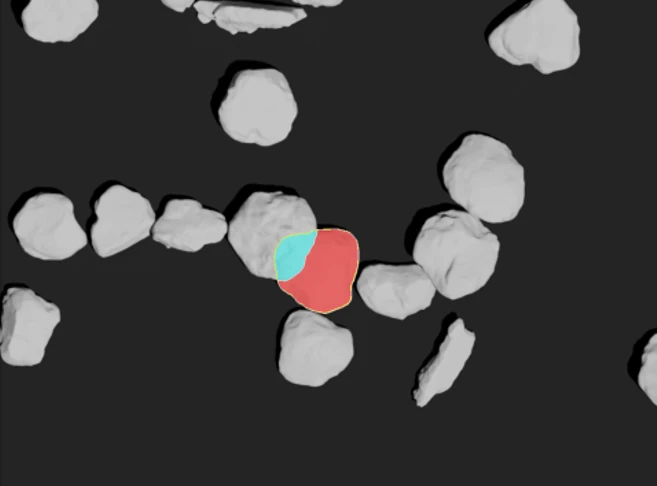
Amodal segmentation
Estimate the full projected particle shape, including occluded regions.

Physics-based synthetic data for SEM powder characterization.
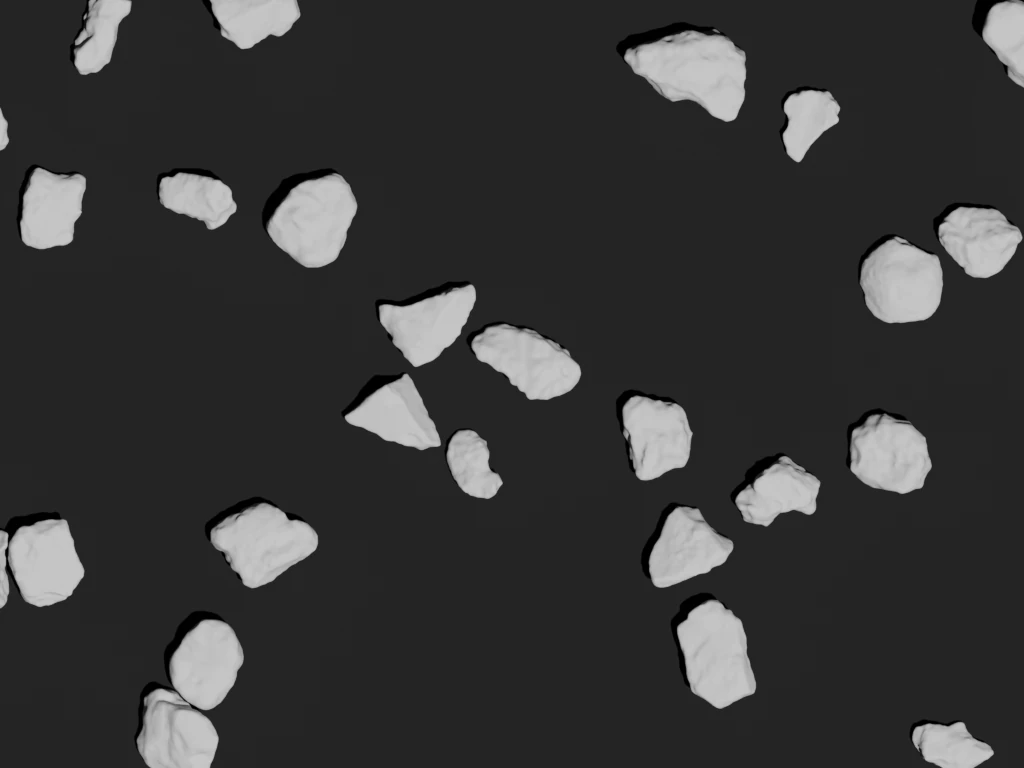
PowderGen uses 3D particle scans and rigid-body simulation to create multi-modal synthetic powder scenes representative of real SEM images. PowderBench contains these scenes, and paired multi-modal labels, enabling improved model performance and expanded characterization capabilities in scientific computer vision.
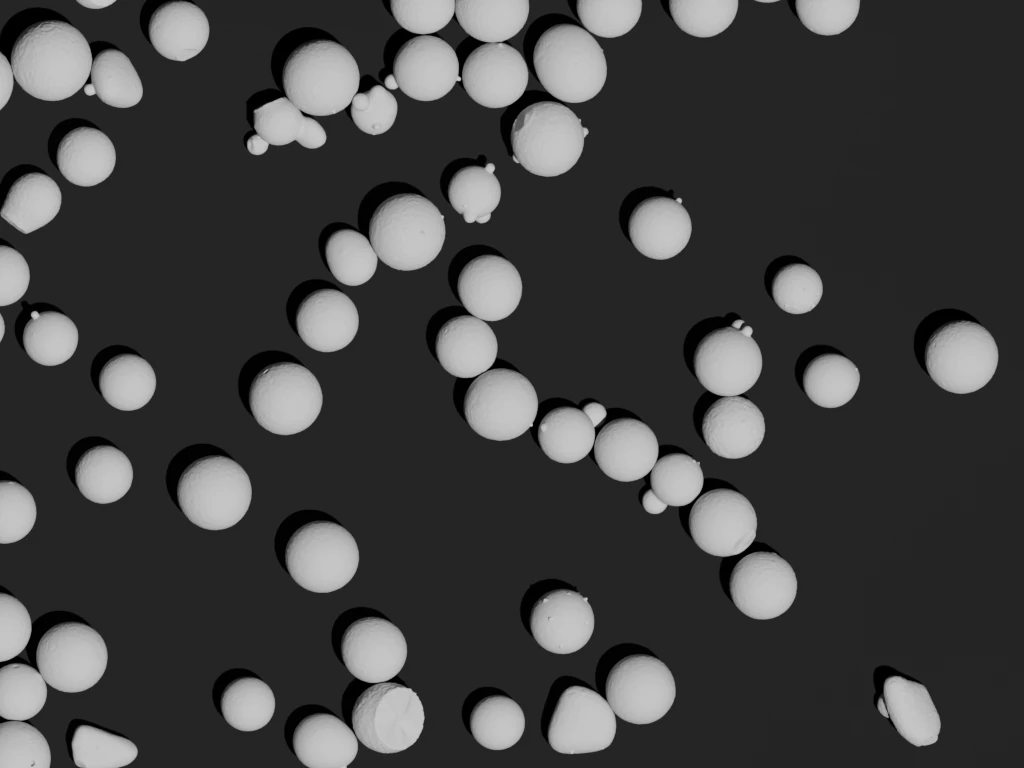
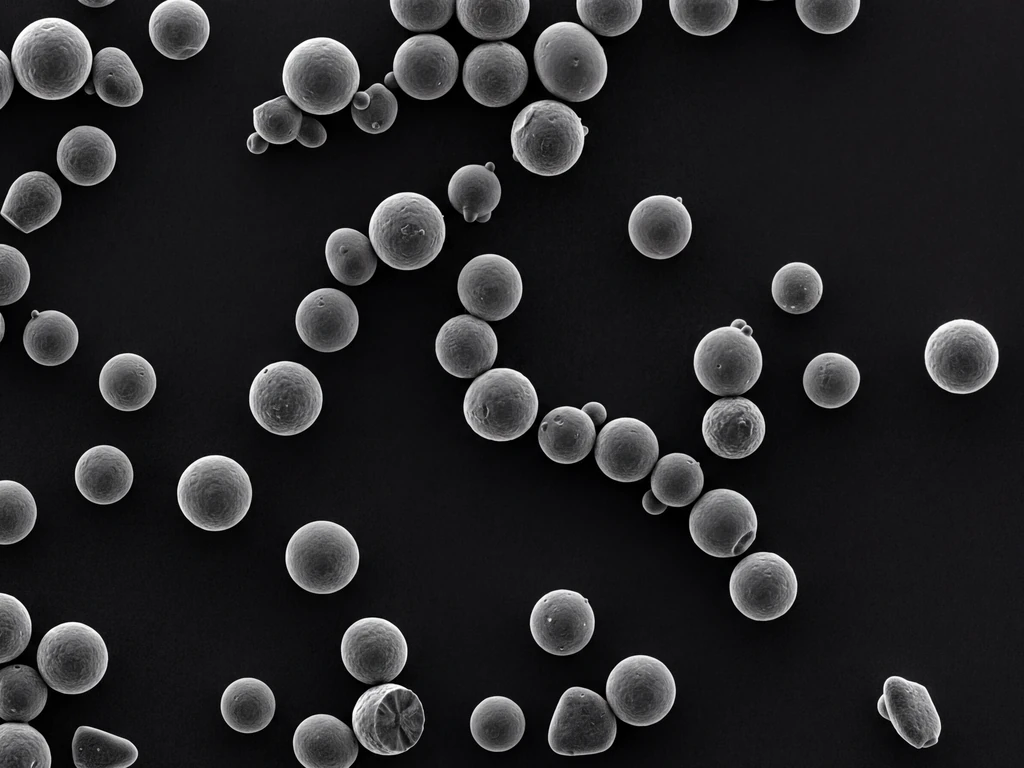
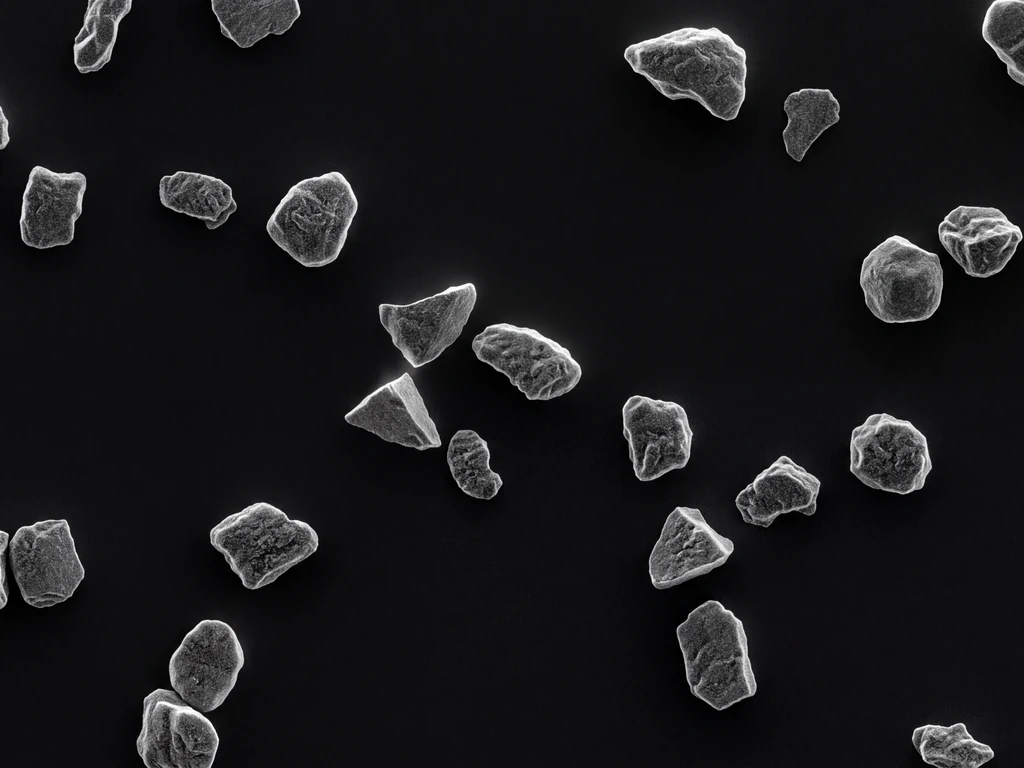
Synthetic SEM Images for Model Training
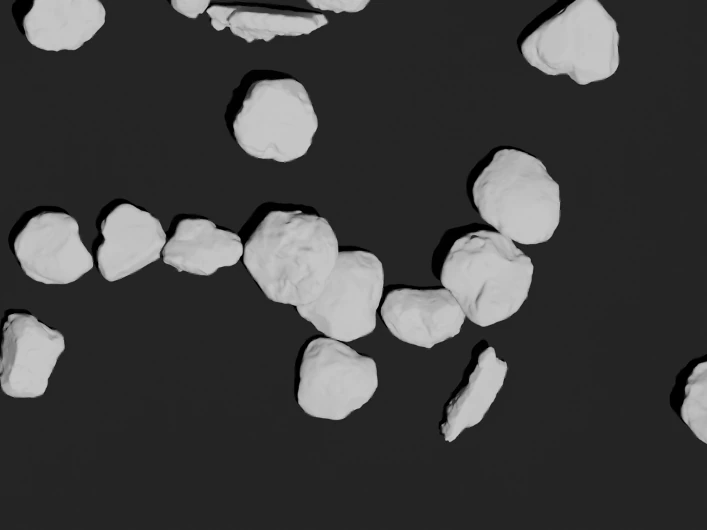
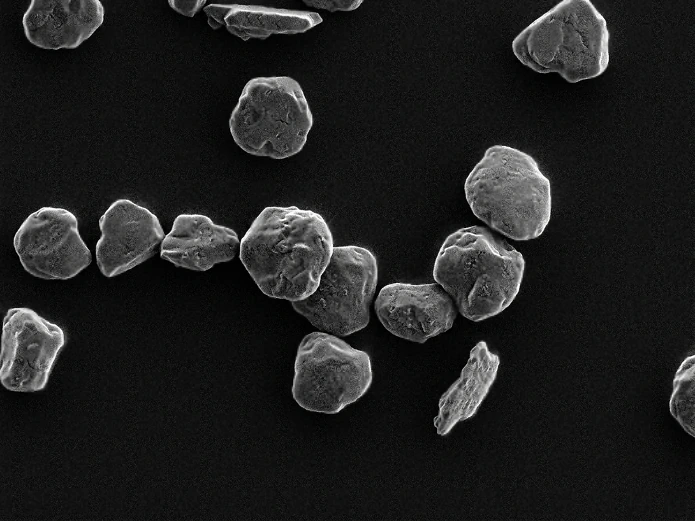
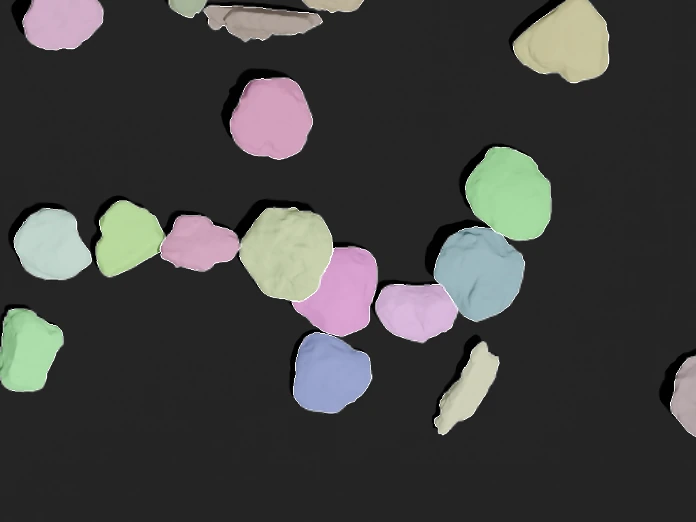
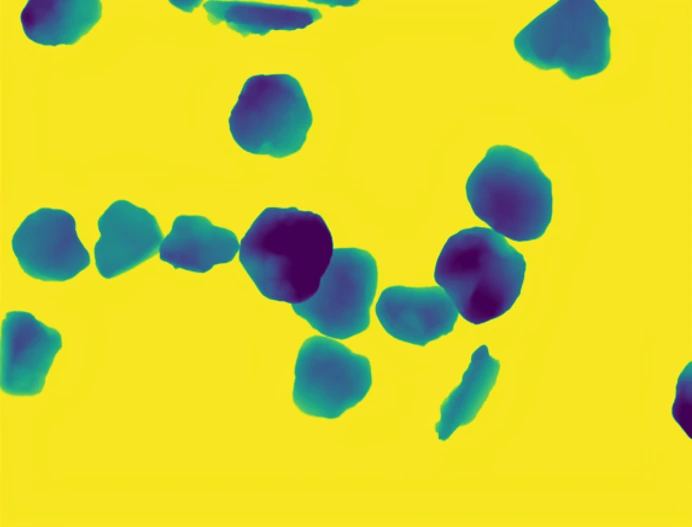
Each scene pairs rendered and SEM-style images with labels that are difficult to obtain from a single micrograph. The dataset also includes amodal masks and 3D particle geometry.
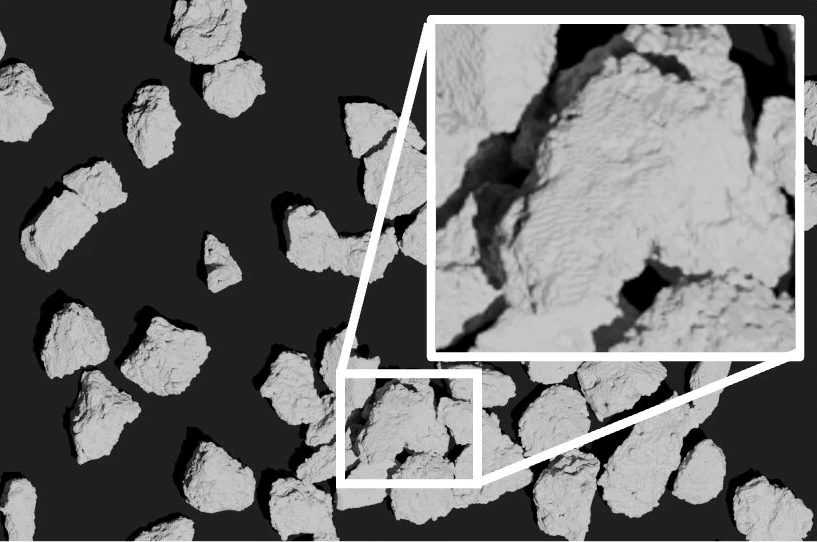
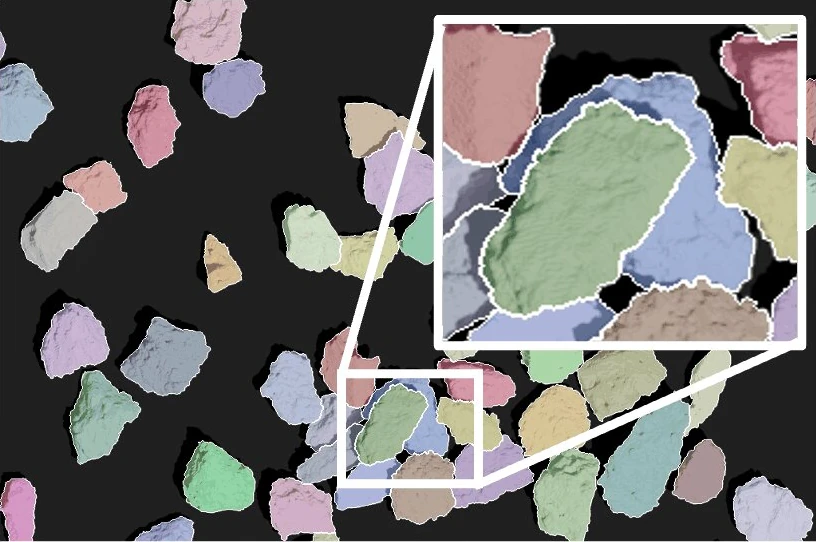
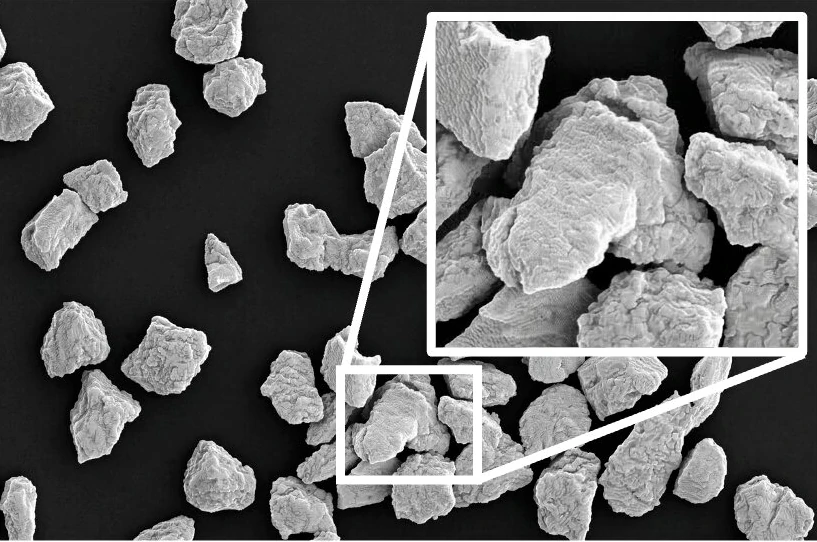
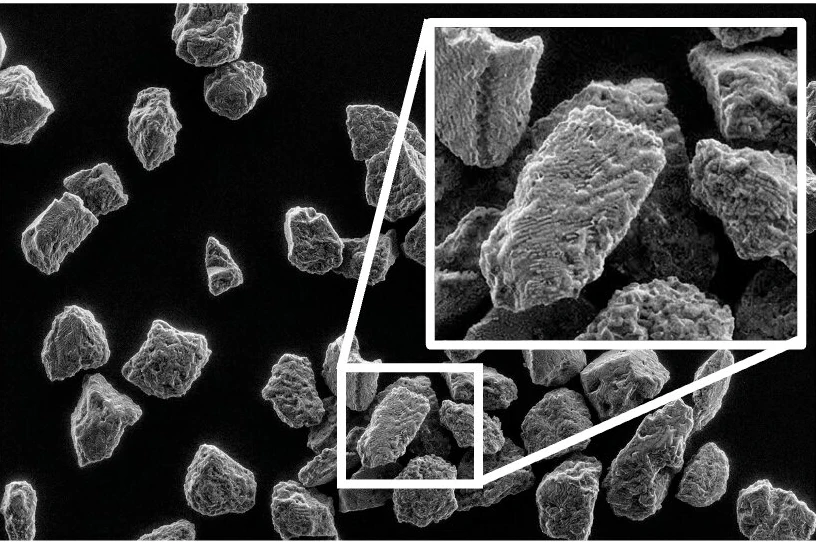
Render-only translation uses the rendered image; multi-channel translation also uses an instance overlay, surface normals, ambient occlusion, and depth to help preserve particle boundaries.
Mask R-CNN performance on 67 held-out real SEM images, comparing real-only training with training supplemented by 540 synthetic PowderBench images. Synthetic data provides the largest gains with fewer real training images. Error bars show the reported variation across three training seeds.
Estimate the full projected particle shape, including occluded regions.
Predict visible surface depth from a single image.
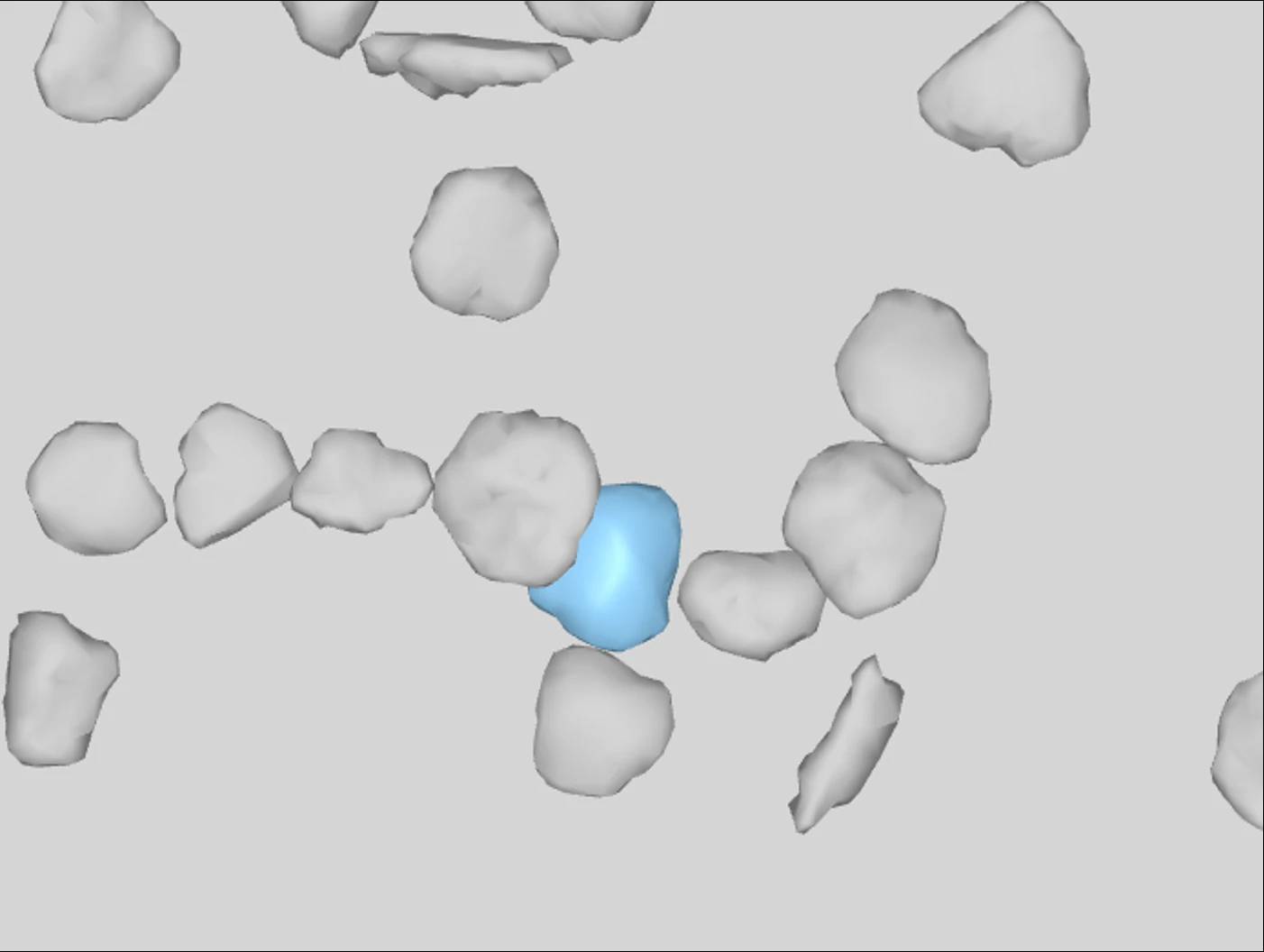
Recover particle geometry from a single view.
These scenes provide amodal masks, visible-surface depth maps, and 3D particle geometry. Results are evaluated quantitatively on held-out synthetic scenes, with small expert assessments on real images for amodal segmentation and depth; real-image 3D performance remains unverified.
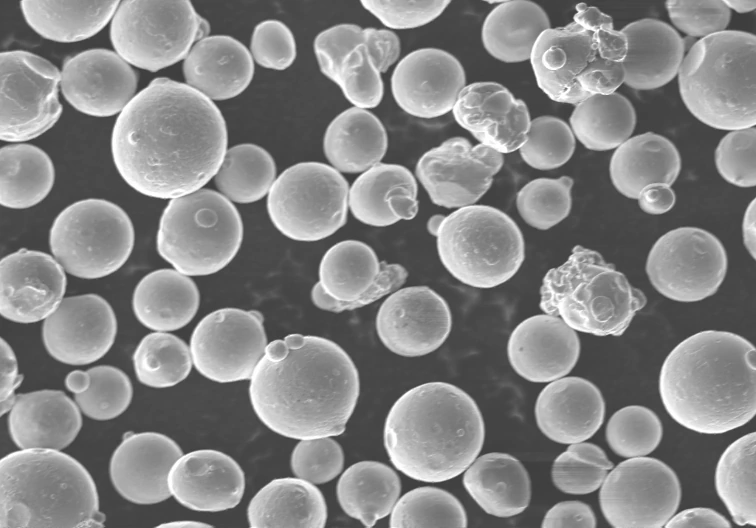
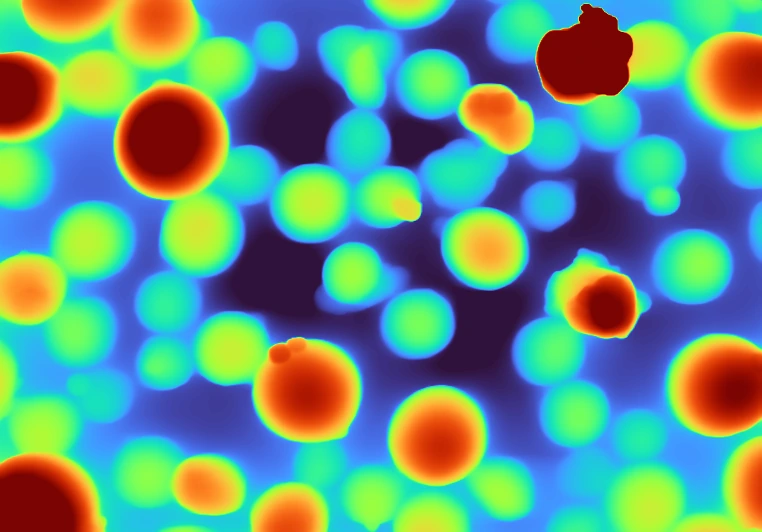
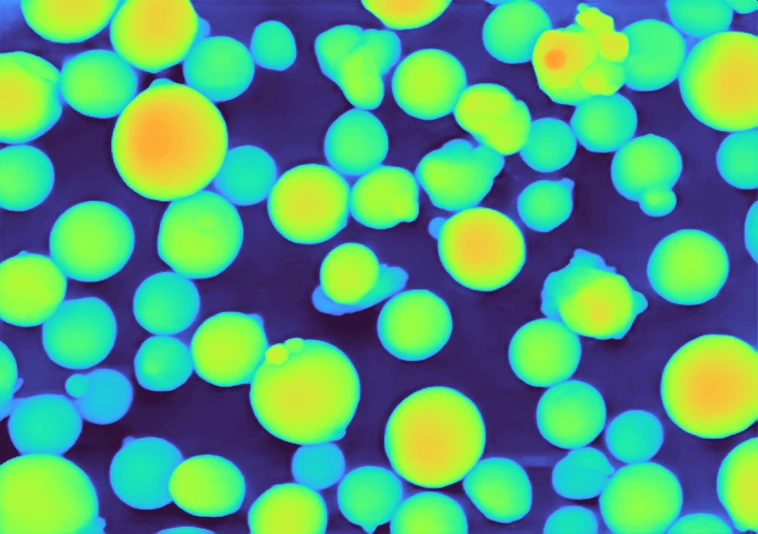
Depth Anything V2 Small was fine-tuned on PowderBench and assessed on real micrographs using a blinded expert comparison. These are qualitative predictions, not measured depth; the study assessed 10 real SEM images.
Estimated curves
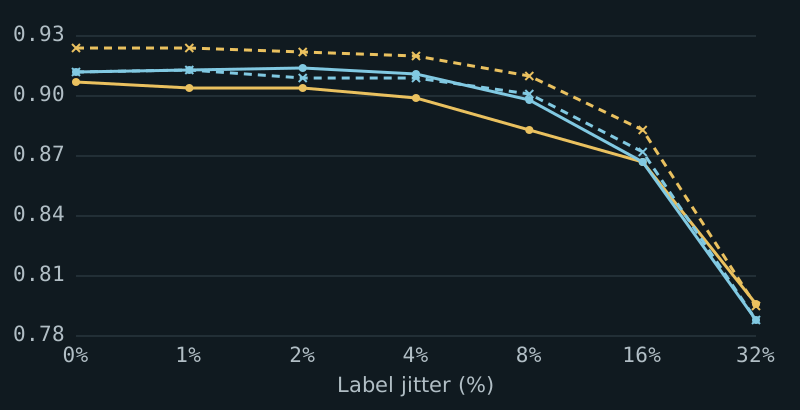
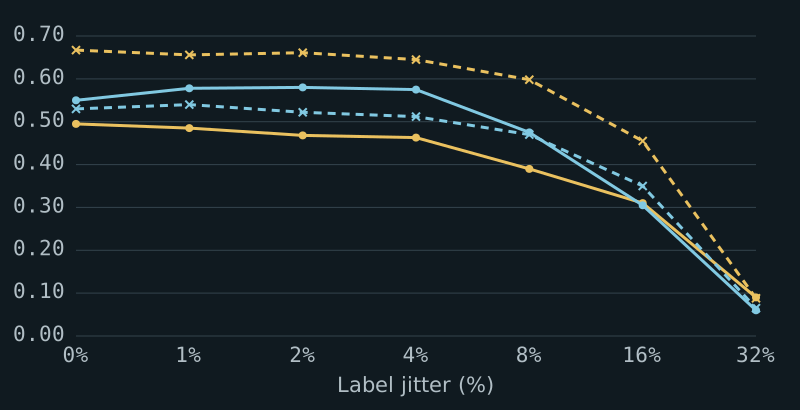
Synthetic masks are perturbed by 0–32% IoU deviation. Real-image test performance remains relatively stable through 4% deviation, then declines as masks become less precise.
Results from Stephen Price, Danielle L. Cote, and Elke A. Rundensteiner, PowderGen: Physics-Based Data Generation for Multi-Modal SEM Powder Characterization, Proceedings of the IEEE/CVF Winter Conference on Applications of Computer Vision (WACV), 2027. Research conducted while at Worcester Polytechnic Institute.
Talk with Atomix about microscopy, synthetic data, or model evaluation.